
In Norway, there are several tens of thousands of homeless animals. Most are left to fend for themselves after being abandoned by their owners or born to an already homeless mother.
Animal Protection Norway’s ethical platform states that until state animal welfare authorities take responsibility for the welfare of homeless animals, Animal Protection Norway shall provide necessary measures to the best of its ability. Therefore, homeless animals are one of our most important flagship causes and this is where we dedicate most of our resources.
Background
Irresponsibility among people makes animals homeless. Many acquire animals on impulse and later wish to rid themselves of the responsibility for the additional family member. Some choose to abandon the animals rather than finding them a new home. Every year, Animal Protection Norway rescues animals from roadside ditches and rubbish bins where they have been dumped alive. Unfortunately, we do not always arrive in time, and the animals that have been dumped die before we reach them, or must be euthanized due to illness or injury.
Lack of restrictions on purchasing, selling, and breeding contributes to increasing the number of unwanted companion animals. Companion animals that are not neutered worsen the problem further.
There is no public assistance for homeless animals, which is why Animal Protection Norway steps in and rescues nearly 5,500 homeless animals every year. The animals are often malnourished and/or have acute need for medical help. We ensure that they are rehabilitated and rehomed to new, caring homes.
Grim Statistics
Animal Protection Norway, other animal welfare organizations and the media write every year about the issue of homeless animals and about important measures to prevent homelessness, such as through ID marking and neutering of family animals. By ID marking your family animal, the chance of owner and animal being reunited increases if the animal should stray from home. The threshold for dumping animals also becomes higher if the animal is ID marked. By neutering cats and rabbits, one avoids unwanted litters of cats/rabbits which are often difficult to find good homes for, with subsequent risk of homelessness.
Even with annual information campaigns around this topic, the number of homeless animals needing Dyrebeskyttelsen Norge’s help continues to increase.
- 5,342 homeless animals received help in 2022
In 2009, Animal Protection Norway published the report “Home, Sweet Home” and the figures showed that 3,641 homeless animals were cared for by the organization during that year. In 2022, this number was 5,342 animals and we expect this to increase in the years ahead. In recent years, we have also seen an ever-increasing rise in homeless rabbits.
Nearly 90 percent of the homeless animals that receive help from Dyrebeskyttelsen Norge’s local branches are cats.
Many cats are brought in after we have received concern reports from the public. A large proportion of cats we never discover, as they may be human-shy, or be part of a colony that has not yet been discovered. According to the Norwegian Food Safety Authority, there are approximately 750,000 cats in Norway. How many are part of a household and how many are homeless is difficult to estimate. There is no requirement to register companion animals in Norway today, and registration of cats is not as common as registration of dogs.
Companion Animals – Not Pets

Animals have intrinsic value independent of any utility value they may have for humans. Animals shall be treated well and protected against risk of unnecessary stress and strain (Animal Welfare Act, § 3).
Animal Protection Norway deliberately avoids the term “pet” when we talk about animals found in the household. It is natural that a dog, cat, rabbit or guinea pig is regarded as a family member. Therefore, we prefer to use the term “family animal” when we talk about these animals. Animals have intrinsic value independent of any utility value they may have for humans—their existence is not to be a pet or a toy for us humans. The animals are part of the family and not something we can simply discard the day we tire of them.
Our companion animals have been domesticated for so long that they are dependent on us humans. In addition, most animals originally come from areas with a warmer climate than we have in this country, which makes them unsuitable for living outdoors year-round. By making a companion animal homeless, the animal will be exposed to an uncertain future and probably certain death.
Planning Before Acquisition
Acquiring an animal for the family should be a carefully considered action, not something done on impulse. Important questions one should ask before acquiring an animal include, “do we have the time, finances, and opportunity” to have an animal in the family. These should be elementary thoughts to form an opinion about before one begins planning for an animal in the family.
Many animals become homeless because we humans have not thought carefully enough about what it entails to be responsible for an animal.
Giving away animals as gifts is not a good idea. If the recipient has not planned and carefully considered the acquisition of an animal, there is a risk that the animal will be rehomed, dumped, or euthanized.
According to the Animal Welfare Act, children under 16 years are not allowed to have sole responsibility for an animal. Many animals are given to children, such as hamsters, rabbits, and other “cage animals.” These animals risk being left to a lonely existence in the boy’s/girl’s room. Here the animal may be at risk of starving or dying of thirst because it does not receive adequate follow-up from the child, who is not aware that the animal needs supervision. It is healthy for children to grow up with animals, but they should not have primary responsibility for animals brought into the household. Remember that it will always be the adults in the family who are responsible for ensuring the animal lives a good life.
Cats Are Seen as Inferior
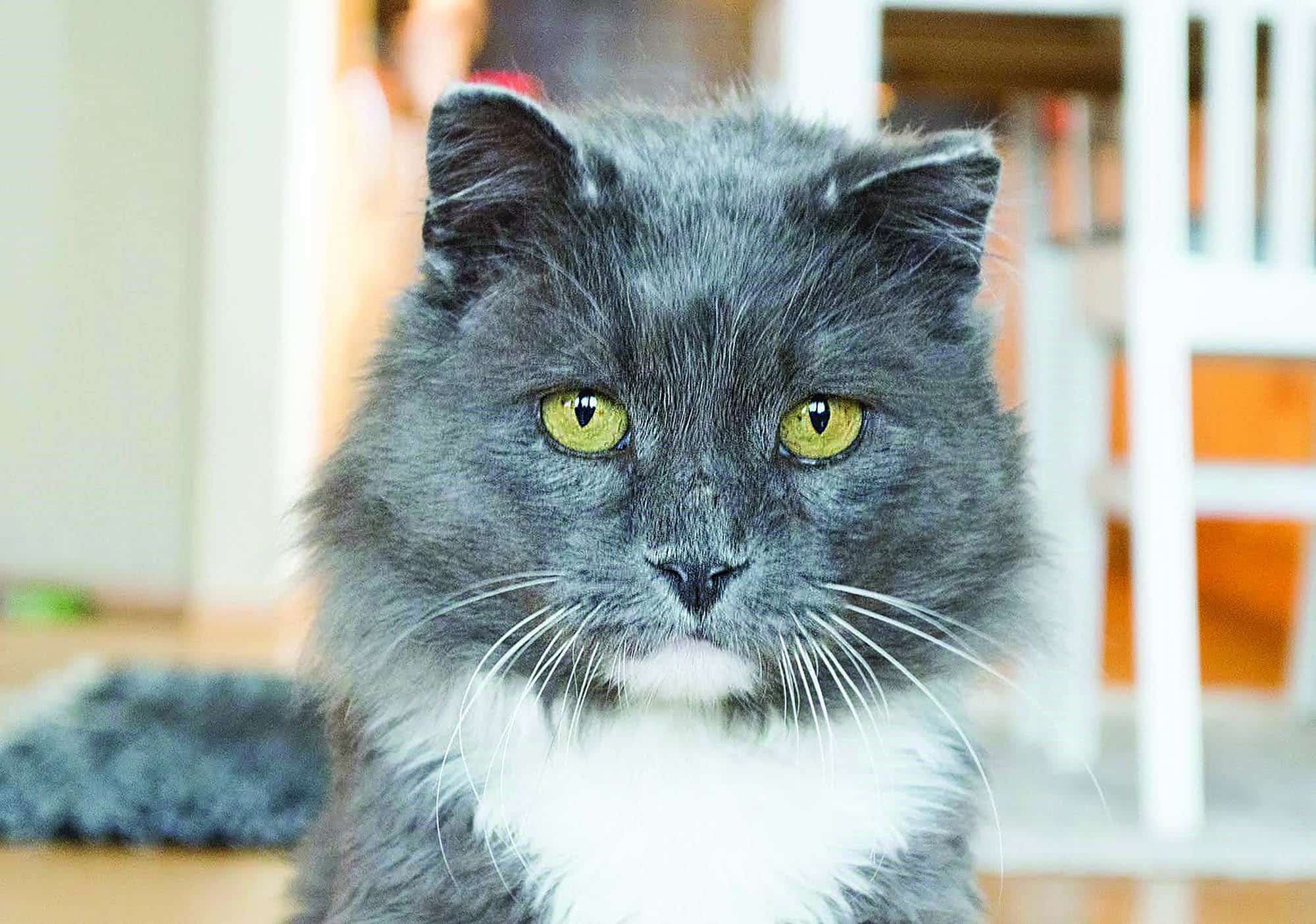
Nearly all the animals that Animal Protection Norway helps are cats. Compared to dogs, cats have a lower status in society, and Animal Protection Norway works actively to raise the status of cats in Norway.
While acquiring a dog is often synonymous with high expenses, it is common for cats to be given away free on advertising platforms such as Finn and in various animal groups on Facebook. This is also reflected later in animal keeping, where ID marking, neutering and regular veterinary follow-up of cats are often absent, while this is self-evident in most dog keeping. Unfortunately, it is not uncommon for something given away free to be taken for granted. Animal Protection Norway believes that raising the status of cats is important to reduce the use-and-discard mentality that unfortunately some people have towards cats today.
Cats are overrepresented in statistics concerning abuse and killing of companion animals in Norway. This may be partly because cats are more outdoors on their own, compared to other companion animals, which makes them more vulnerable to attacks.
Many of the cats taken in by our volunteers are sick and have injuries. Sometimes we must make the difficult decision to let the cat escape its suffering rather than try to give it treatment. Homeless cats live a tough life and are exposed to, among other things, frostbite in winter, eye problems as a result of injury or illness, bite wounds, and various infectious diseases. Not all cats we take in thrive with humans, as they may have been born to an already homeless mother, or have lived too long without human contact. These cats will not have a good life in a regular home.
– Approximately 87% of the homeless animals that received help in 2022 were cats
One of our most important measures to raise the status of cats in society is through attitude-changing work. For all cats (and other animals) rehomed through Animal Protection Norway, an adoption fee must be paid. This fee has two purposes; it shall cover some of the expenses the organization has for neutering, ID marking and vaccination, among other things. Most importantly, however, is to emphasize that a cat is not free—neither to acquire nor to keep. This is important to reduce the use-and-discard mentality that unfortunately some people have towards cats today.
Many Misconceptions About Animal Species

There are many myths and misconceptions about animals. One of the most common myths about companion animals is that female cats should not be neutered until after they have had a litter. This myth has long been outdated and there is no research that can support this claim.
The expected lifespan of animals is something not everyone has familiarized themselves with before acquiring an animal. Rabbits can live as long as 12 years, guinea pigs 8 years, and chinchillas 30 years, to give some examples. Yet many are under the impression that a rabbit typically does not live longer than 2-3 years.
Unfortunately, there are many “cage animals” that live their entire lives confined in a cage, when they are actually social animals with needs for movement and mental stimulation. One example is the rabbit. Rabbits are social and intelligent animals that can easily be trained to become house-trained. Previously, it was common for rabbits to sit in small cages, either indoors or outdoors, for large parts of their lives. Fortunately, focus has been placed, both by various organizations and the Norwegian Food Safety Authority, on the fact that a life in a cage is not compatible with good welfare for rabbits. For rabbits to stay healthy and be content with life, they must have the opportunity for free movement. If rabbit owners have insufficient knowledge about the rabbit’s needs, for example what is proper food, this will result in generally low quality of life, and it is often the reason why many rabbits become aggressive, apathetic, and die prematurely.
Many animals become homeless because owners do not familiarize themselves well enough with the animal’s needs before acquiring the companion animal.
What Can You Do?
If you suspect an animal is homeless or has gotten lost from home, you should first check if the animal belongs to your neighborhood – ask your neighbors and put up posters. Find out if the animal is ID marked. ID scanners are available at veterinarians, police, our local branches, and some security companies. Checking ID marking at a veterinarian is completely free – an overview of the nearest veterinarian can be found at dyreklinikk.no. We recommend that you call the veterinarian and check with them beforehand. There are also many groups on Facebook, both local and nationwide, where you can post a thread about the animal you have found. At Dyrebar.no, you can create a found/missing advertisement. If you do not find the animal’s owner, you can contact the local branch nearest to you. It may also be that your local branch can help with lending a cage to catch the cat or rabbit.
Neuter your cat/rabbit to prevent unwanted offspring. ID mark your dog, cat, and rabbit and also other companion animals, so that you can be reunited if they should get lost from home.
Think carefully before acquiring an animal. Ask yourself if you have the finances and time to care for an animal throughout its entire lifetime. Remember that animals that are well cared for often live longer than you think.
If you wish to acquire a companion animal, check with organizations that work with rehoming homeless animals. There you will find many wonderful animals that need a new family. You do not always need to go to breeders. By adopting a companion animal from one of our rescue centers, you get a family member that has undergone health checks, received vaccines, been ID marked, and neutered (if the cat or rabbit is old enough for this).
Our rescue centers are overcrowded and we always need people who can help. Volunteer with one of our local branches or with another organization that works with animal rehoming.
If you have the opportunity, you can register as a foster home. There are many animals that need a temporary place to live until their forever home has been found.
Become a member of Animal Protection Norway and support our work to help homeless animals.
What Does Animal Protection Norway Do About Homelessness?
This is the campaign we work most with. Our 25 local branches take in homeless animals, which are health-checked and receive veterinary treatment, the animals are socialized, and we find new forever homes for the animals.
In 2022, our local branches spent almost 30 million kroner on work with animals in need. Of these, 18.3 million kroner were expenses for veterinary assistance.
Animal Protection Norway works actively to influence politicians and other decision-makers to introduce mandatory ID marking of family animals. With legally mandated ID marking in place, it will reduce the number of animals that end up homeless because they cannot find their way home. ID marking will also prevent animal owners from dumping the animals they do not want, because the authorities will be able to trace and punish irresponsible owners.
Animal Protection Norway works actively with information efforts regarding neutering and ID marking of cats in the media and to the public. Below you can see some of the information material we have had regarding homelessness in recent years.
Sign the petition for mandatory ID marking of companion animals at this link.


